When Failure Isn’t an Option: Fault Detection & Diagnostics (FDD) in a Mission-Critical Hospital System
July 16, 2026
A hospital never gets a day off. When a chiller drifts out of range or an air handler quits, you don’t just have to deal with a stuffy office. The reality is, you’re probably dealing with an operating room that’s out of spec, medication stored at the wrong temperature, or a clinical team pulled off a patient to chase down a building problem. In a hospital, building performance is patient safety. That is exactly the problem fault detection and diagnostics (FDD) was built to solve.
Key Takeaways
- In a hospital, building performance is patient safety. A single chiller or air handler failure can take down an operating room, spoil medication, or pull clinical staff off patients.
- FDD finds equipment faults automatically and ranks each one by cost and patient-comfort impact — so teams fix what matters most first, instead of chasing whoever called last.
- Connecting FDD to the work-order system — roughly 13,000 calls and 26,000 work orders a month — puts the whole team on one source of truth.
- Catching high-level faults before they cascade has been a game changer across a 42-hospital, three-state portfolio.
As one facilities leader at the health system put it:
“Failures that don't occur have a price tag that you can't quantify. One of the things I always tell my team is that we really never get credit for all of the bad things that never happen.”
Leader at HealthCare System
What does building reliability look like across 42 hospitals?
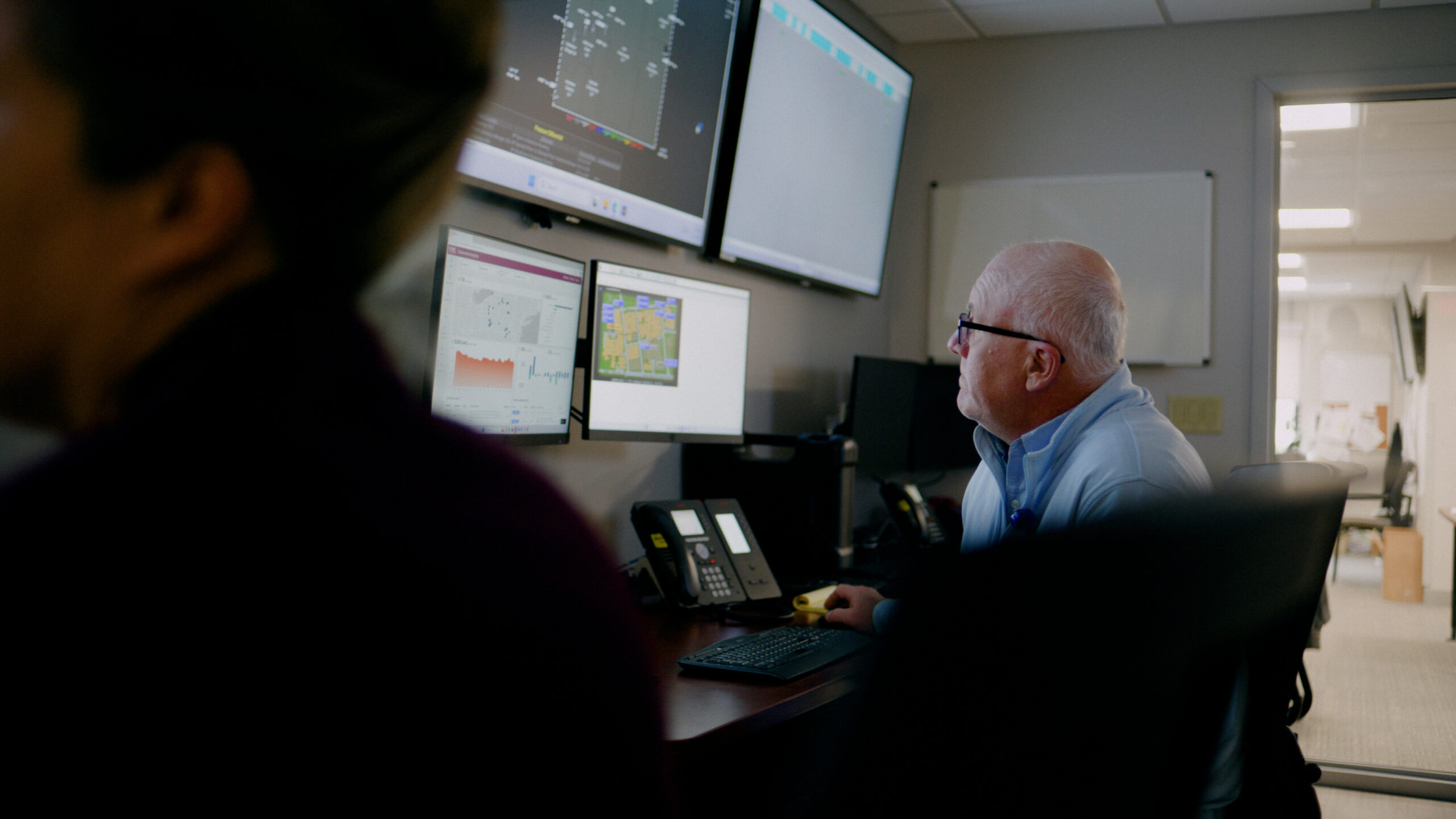
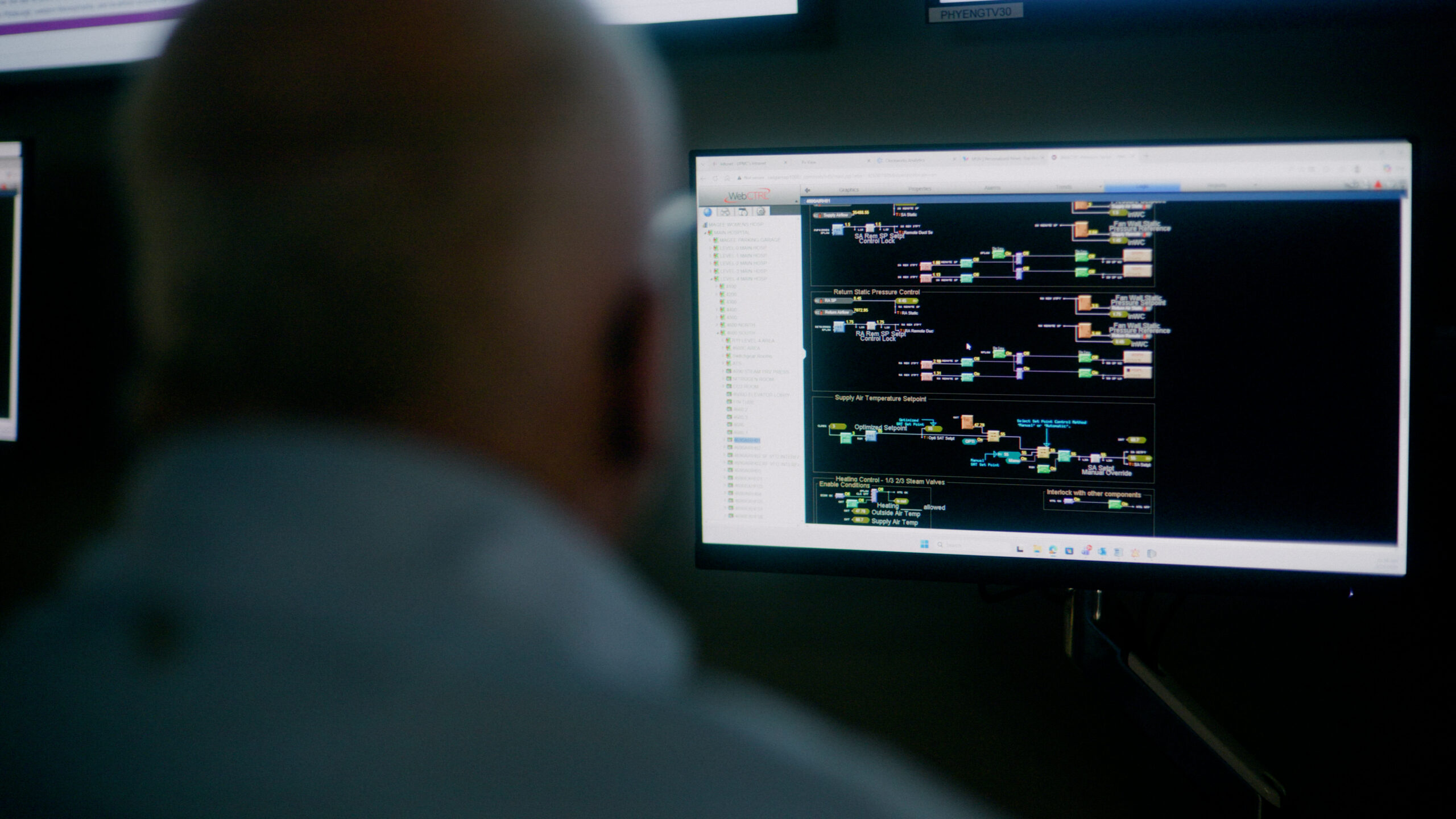
This is one of the largest health systems in the country — roughly 42 hospitals across three states. From a single command center, the facilities team monitors the building automation systems that run HVAC, medical gases, and fire alarm for the entire portfolio, with the ability to see and control equipment remotely. That is an enormous amount of critical infrastructure to keep healthy at once, and when something slips, the cost is measured in far more than dollars.
Why can’t hospitals rely on manual fault detection?
For years, finding a problem meant going to look for it — walking across multiple mega-campuses, hunting down the exact model and equipment, or waiting for a complaint to surface something already broken. Across dozens of hospitals and thousands of pieces of equipment, that approach doesn’t scale, and in a care setting it leaves almost no margin for error. On one major campus project, the team also needed a cleaner way to communicate issues and hand off work — without endless back-and-forth or crews working from different versions of the truth.
How did the team wire fault detection into 26,000 work orders a month?
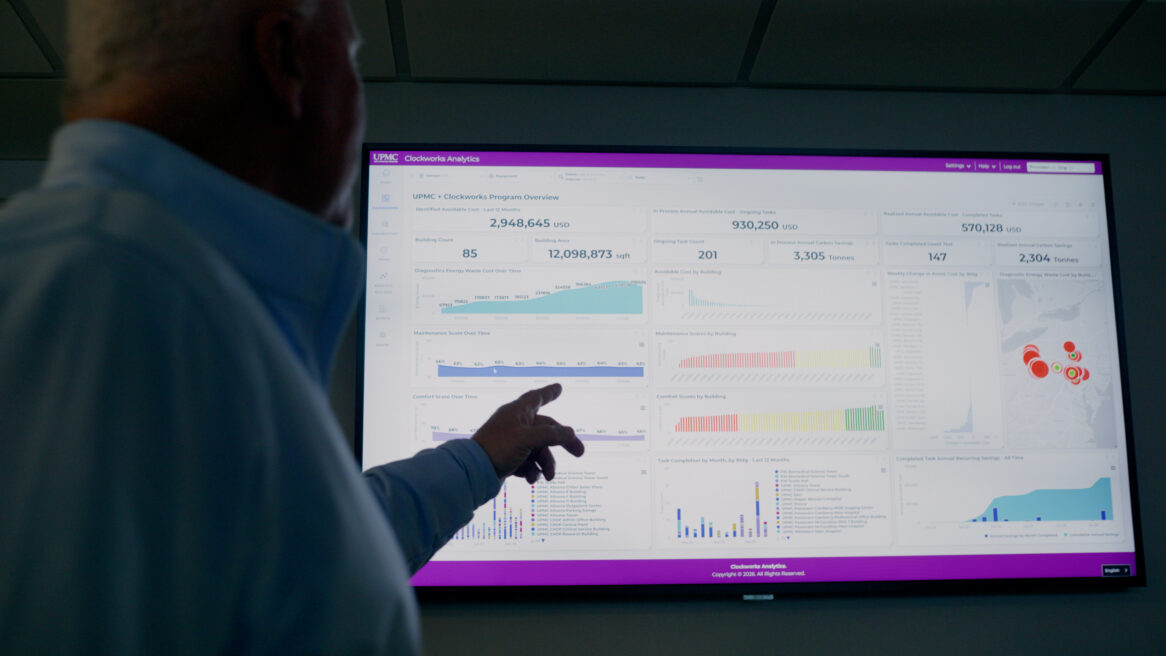
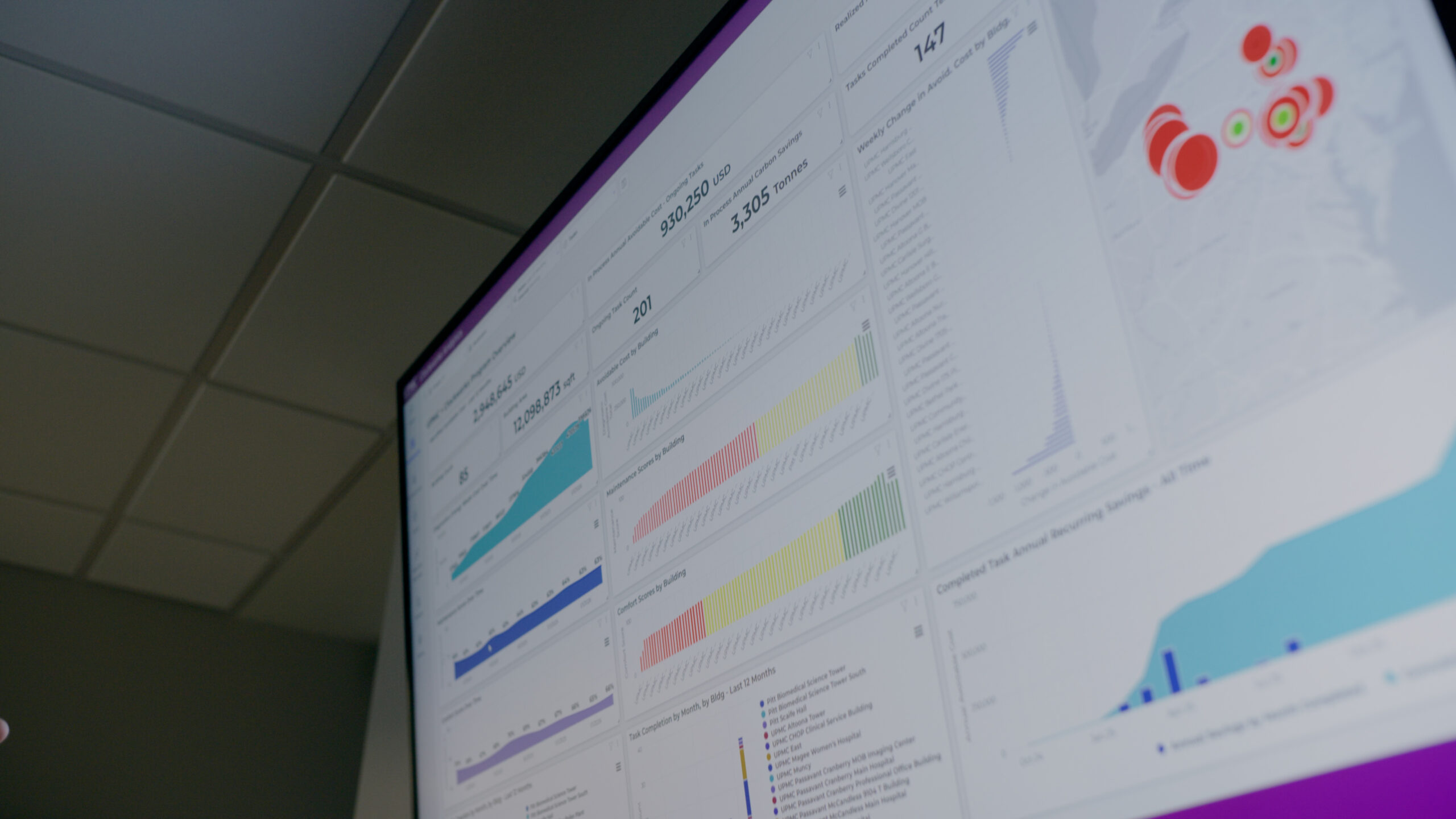
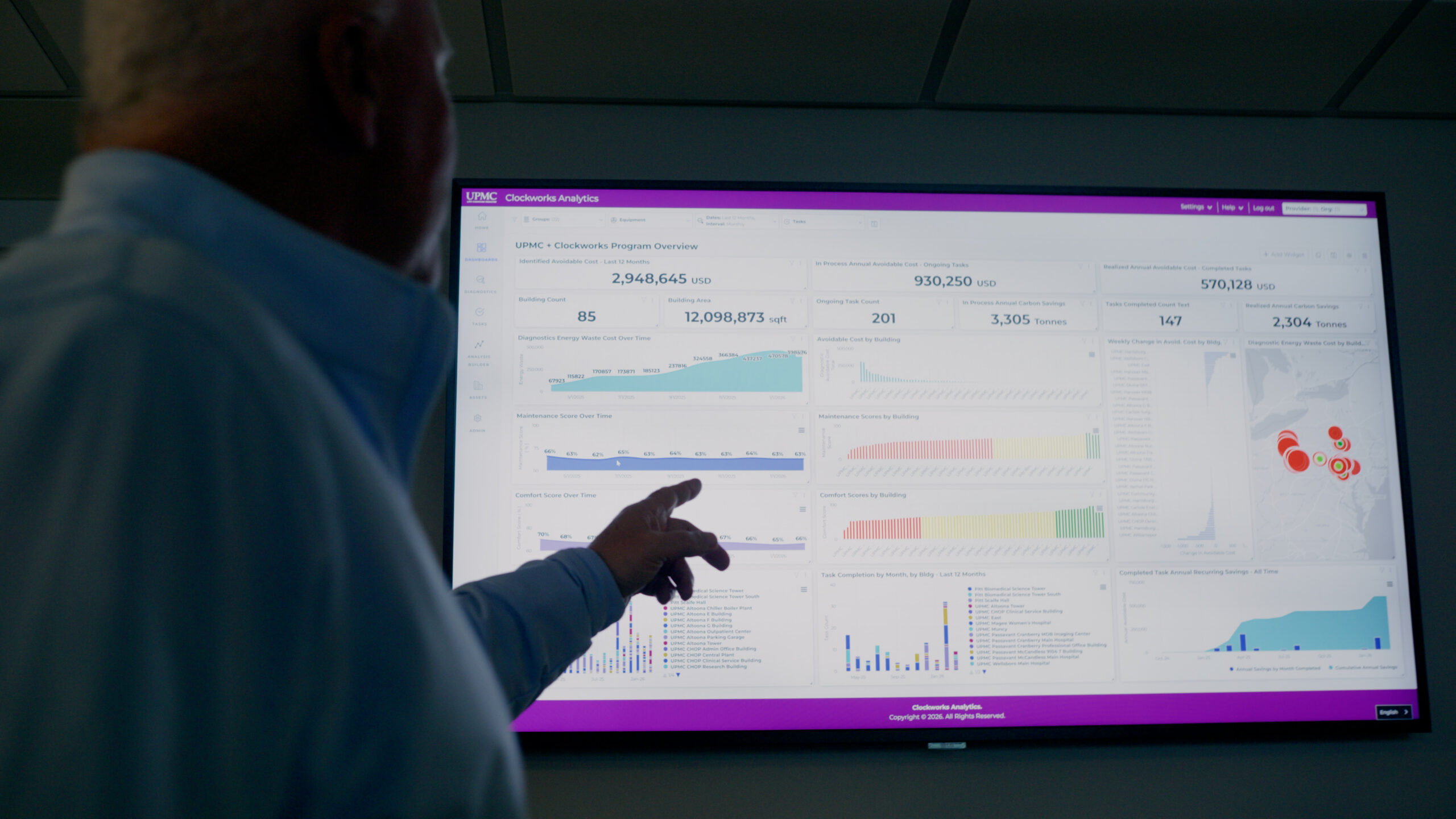
With fault detection and diagnostics, the team stopped hunting for problems — the system surfaces them. Faults appear on screen automatically, each tagged with a dollar figure and a patient-comfort score, so the team prioritizes real impact instead of by whoever called last.
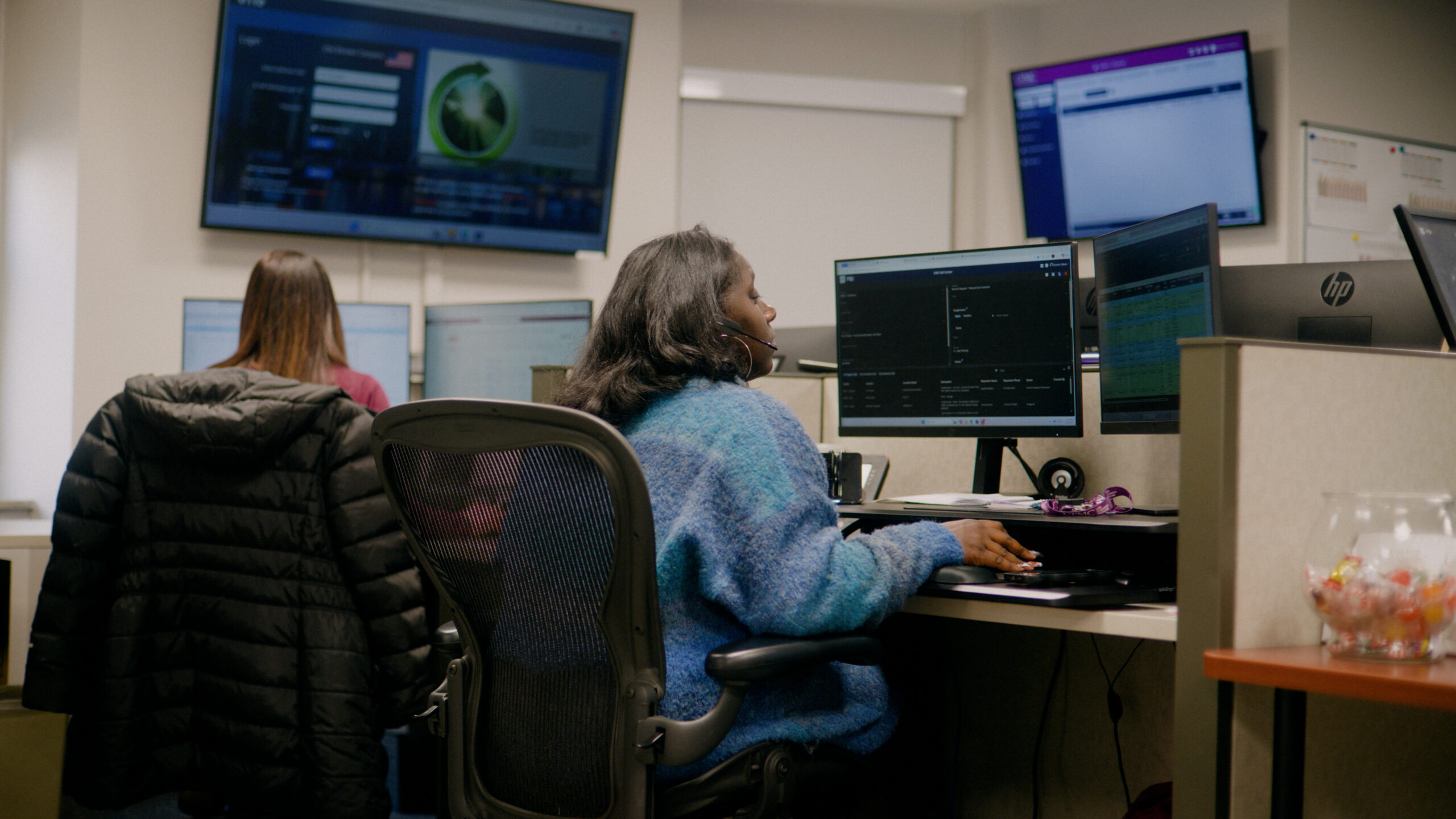
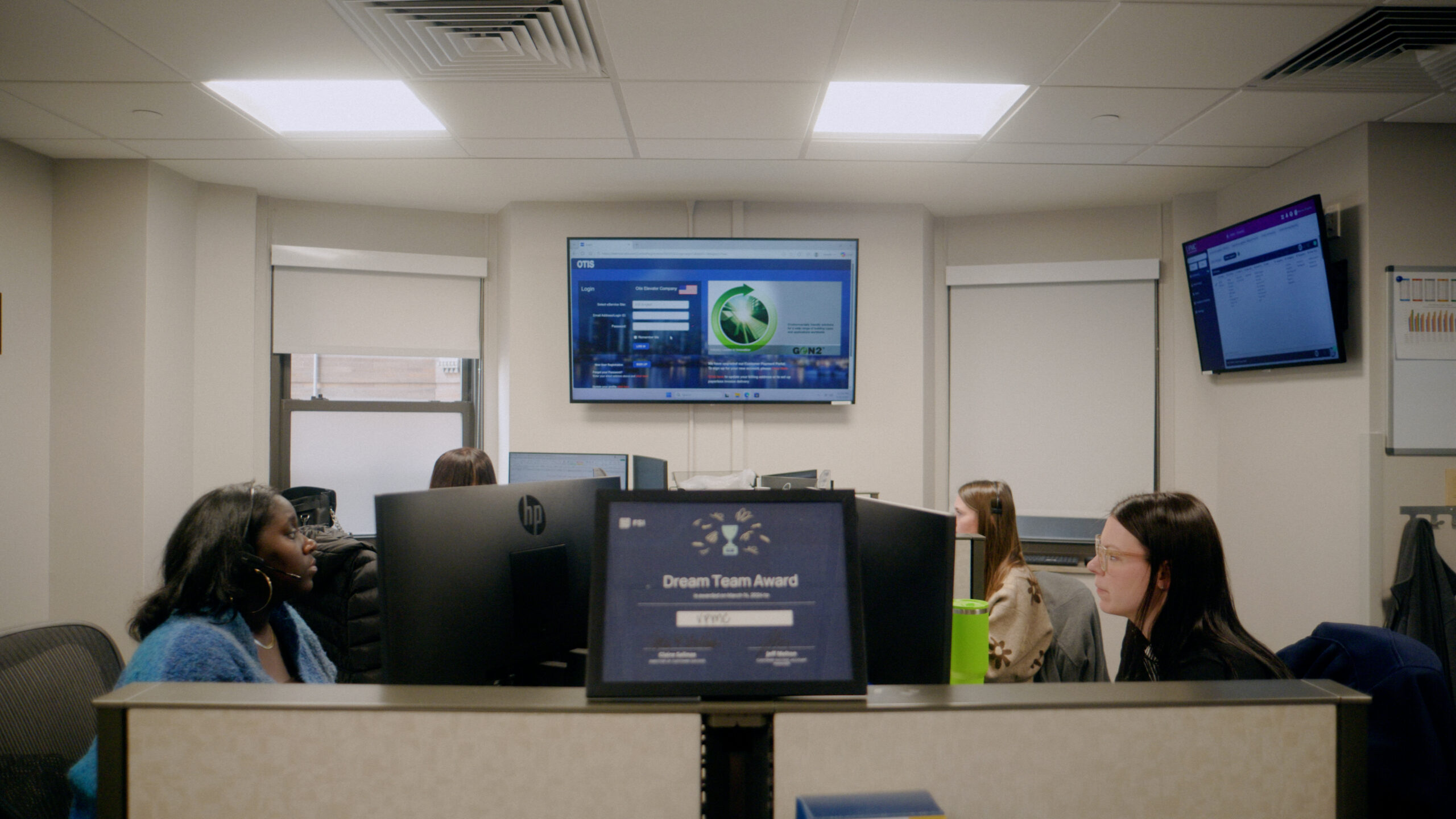
Just as important, Clockworks connects directly to the facilities work-order system — the team’s single source of truth. The scale is staggering: operations logistics specialists field about 13,000 calls and generate roughly 26,000 work orders every month. Wiring fault detection straight into that workflow means high-level equipment faults get caught and tracked before they grow into bigger problems, and everyone works from the same real-time picture.
What changes when you catch faults before they cascade?
Catching high-level faults early — before they cascade — has been, in the team’s words, a game changer, and the integration with fault detection is what made it possible. But the clearest measure of what this work protects doesn’t come from a dashboard. It came from a team member, recalling the night her own five-year-old had an asthma attack and had to be rushed to the hospital.
“As a parent sitting back thinking that the clinical team is trying to resuscitate my five-year-old, I thought to myself: thank God they don’t have to worry about the water. Thank God they don’t have to worry about the equipment not working. The clinical team was able to pull that 100% focus on my five-year-old.”
That is what reliable buildings buy in a hospital: they let clinicians focus on nothing but the patient in front of them.
“We now have a system in place that we all share that puts everybody in a position to succeed.”
Frequently Asked Questions
What is Fault Detection and Diagnostics (FDD)?
FDD is automated building analytics. It continuously monitors HVAC and other critical building systems, flags faults the moment they appear, and ranks them by cost and patient-comfort impact — so facilities teams stop hunting for problems and fix the ones that matter most first.
Why is fault detection important in hospitals?
A hospital cannot have a day off. When a chiller drifts out of range or an air handler fails, the result can be a compromised operating room, spoiled medication, or clinical staff pulled away from patients. In healthcare, building performance is patient safety.
How does FDD change the way facilities teams find problems?
Instead of walking the equipment or waiting for a complaint, teams let the system surface faults automatically. Each fault carries a dollar figure and a patient-comfort score, so work is prioritized by impact — not by whoever called last.
How does FDD work with a work-order system?
Clockworks integrates directly with the facilities work-order system, the team’s single source of truth. High-level faults are caught and tracked before they escalate, and everyone works from the same real-time information — across roughly 26,000 work orders a month.
What results has the health system seen?
Cleaner communication and smoother project turnovers on major campuses, plus high-level equipment faults caught early — before they cascade — with the whole team working from one real-time view.